
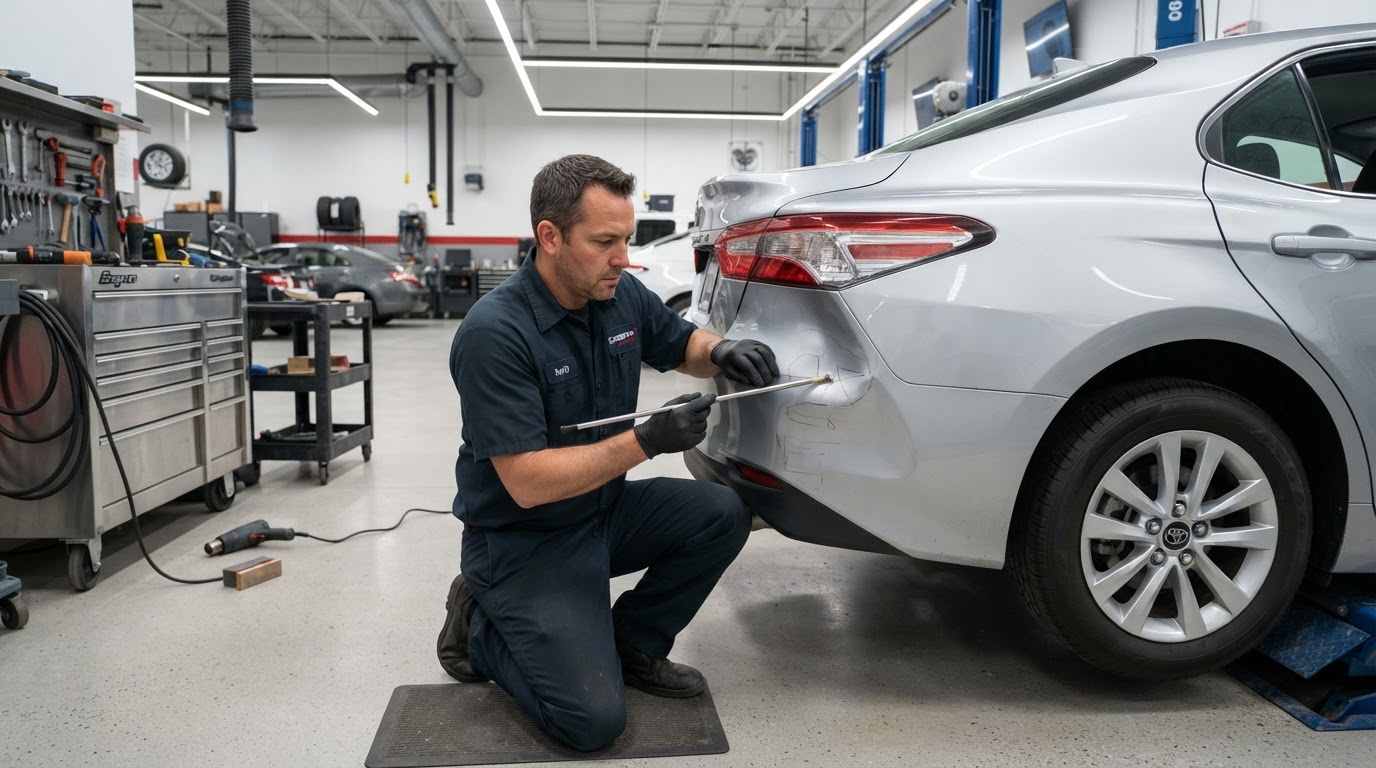
Assuming every dent needs a brand-new panel
The first mistake is assuming that a dented panel must be replaced. In reality, many dents can be repaired — either through paintless dent removal for shallow dents with intact paint, or through conventional bodywork for deeper damage. Replacement is sometimes the right call, but it is not the default. A proper dent and bumper repair assessment examines the depth, location, and material of the dent before recommending a path. A shallow, round dent in the middle of a door is a textbook candidate for paintless removal. A crease across a body line may need conventional repair. A panel with torn metal or stretched skin may need replacement. The key is matching the repair method to the actual damage, not reaching for the most expensive option first. A shop that explains why it recommends repair or replacement — with photos and a hands-on look — is giving you the information you need to make a confident decision.
Ignoring what is behind the bumper cover
The bumper cover is the visible skin, but the bumper system includes absorbers, reinforcement bars, mounting brackets, and sensors behind it. The second mistake vehicle owners make is assuming that because the cover looks repairable, the entire bumper is fine. A low-speed impact can crush the absorber behind an undamaged cover, leaving the bumper unable to absorb energy in a future collision. Sensors can be knocked out of alignment without visible damage to the exterior. A proper collision and auto body repair inspection checks the mounting points, the absorber, and the reinforcement behind the cover before recommending any repair. If the hidden components are damaged, repairing only the cover does not restore the bumper's function. The shop should show you what it found and explain why each component needs attention.
Reaching for a DIY dent repair kit
The third mistake is attempting a do-it-yourself dent repair with a kit from the internet. Dry ice, suction cups, and glue-pull tabs can sometimes improve a shallow dent — and just as often make it worse. Pulling a dent with excessive force can stretch the metal beyond its ability to return to shape, leaving a raised dome that is harder to fix than the original dent. Glue residue can damage the paint finish. On plastic bumper covers, pushing from behind can crack the material or pop a mounting tab. The result is often a dent that now requires panel alignment and damaged parts replacement instead of the simple repair it started as. Paintless dent removal requires specialized tools, trained technique, and access to the back of the panel — skills that take time to develop. A professional assessment costs less than repairing a dent that a DIY attempt has made worse.
Waiting until the dent cracks the paint
The fourth mistake is procrastination. A dent in a steel panel stretches the paint, and over time the stress at the edges of the dent can cause the paint to crack. Once moisture reaches bare metal through that crack, corrosion begins — especially in South Florida's humidity. What was a paintless dent removal becomes a conventional repair requiring sanding, filler, primer, and repainting. On plastic bumper covers, a dent that flexes with temperature changes can develop stress cracks that spread across the cover. Addressing a dent promptly, while the paint is still intact, preserves the option of the least invasive and most affordable repair. Waiting until the paint cracks or the cover splits eliminates that option and increases the cost. An automotive painting and color matching repair on a previously simple dent costs significantly more than the paintless removal would have.
Skipping the mounting-point check
The fifth mistake is focusing only on the dent itself and ignoring the mounting points that hold the panel in place. A dent near a bracket, hinge, or mounting tab can shift the panel's position, creating uneven gaps with adjacent panels or preventing a door from closing properly. Even after the dent is repaired, if the mounting points are bent, the panel will not fit correctly. A thorough scratch repair, polishing, and finishing assessment includes checking the gaps, hinges, latches, and weatherstrips around the damaged area — not just the visible damage. If the mounting points are compromised, the repair plan must address them, or the finished repair will look correct from a distance but fail up close. The test is simple: do all the doors, hood, and trunk open and close with a solid, even feel? If not, there is a mounting or alignment issue that the dent repair alone will not solve.
Missing sensor damage after a low-speed impact
Modern vehicles are equipped with parking sensors, backup cameras, and blind-spot monitors mounted in or behind the bumper covers. A low-speed impact that seems cosmetic can knock a sensor out of position, crack a camera lens, or damage a wiring harness — all without visible exterior damage. The result is a dashboard warning light, a sensor that no longer detects objects, or a safety system that does not function when you need it. This is why a bumper assessment must include a functional check of the sensors and electronics, not just a visual inspection of the cover. If your dashboard shows a warning after an impact, do not ignore it — the sensor system may need recalibration or replacement along with the bumper repair. A complete repair restores both the appearance and the function of the bumper system. If you notice a warning light after a parking-lot impact, request an assessment before the problem compounds.
Frequently Asked Questions
Can all dents be repaired with paintless dent removal?
No. Paintless dent removal works best on shallow, round dents where the paint is intact. Sharp creases, dents at panel edges, or dents with stretched or cracked paint typically require conventional repair. An assessment determines which method is right for your dent.
My bumper cover looks fine — could there still be damage?
Yes. The absorber, reinforcement bar, and sensors behind the cover can be damaged even when the cover itself looks undamaged. A proper inspection checks the components behind the cover, not just the visible surface.
Should I try a DIY dent repair kit?
DIY kits can make dents worse by stretching the metal or cracking plastic. Pulling a dent with too much force can create a raised area that is harder to fix than the original dent. A professional assessment is usually more cost-effective.
How long can I wait to fix a dent?
Address dents promptly. Cracked paint over a dent lets moisture reach bare metal and start corrosion, and a cracked bumper cover can spread with temperature changes. Waiting increases the cost and complexity of the repair.
What should I check after a parking-lot impact?
Check for dashboard warning lights, uneven gaps around the bumper, and whether doors or the trunk still close smoothly. If any warning lights appear, the sensor system behind the bumper may need inspection.
Can a cracked bumper cover be repaired, or does it need replacement?
Many cracked bumper covers can be repaired with plastic welding or flexible filler, depending on the location and extent of the crack. Cracks at mounting tabs or deep structural cracks usually make replacement the safer option.
This article provides general guidance about dent and bumper repair and does not replace an in-person assessment of your vehicle's specific damage.
Need dent & bumper repair in West Park?
Cannan Family Collision inspects, documents and repairs — with a written estimate you can share with your insurer.