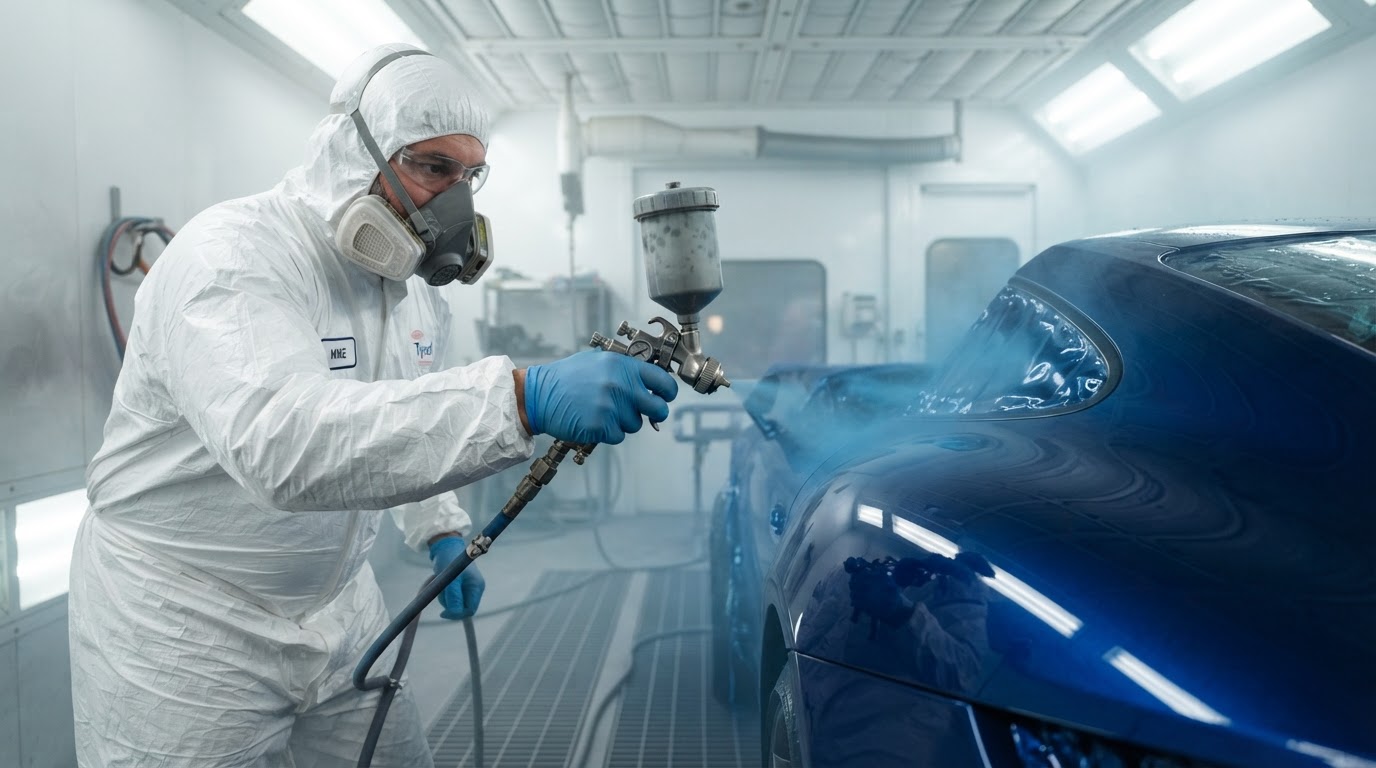
Color matching done properly
Modern paint codes are only a starting point. Sun exposure, paint age and factory variation mean the same code can look different from car to car. We measure your existing finish and build a matched formula, then spray test panels before touching the vehicle. The difference between a shop that relies on the code alone and one that builds a true match is the difference between a repair you can see and one you cannot. Our automotive painting and color matching process accounts for the years your vehicle has spent in the Florida sun, the gradual fading that shifts the tone, and the factory variation that makes two cars with the same code look subtly different. The result is a finish that blends so seamlessly into the surrounding panels that you cannot tell where the repair ends and the original begins.
Blending, panels and full repaints
Small repairs are blended into adjacent panels so the transition is invisible. Full panels are refinished edge to edge, and complete repaints are done in stages with proper prep, primer, base and clear coat. Blending is the technique that prevents a visible boundary where new paint meets old — because even a perfectly matched color can show a line if the adjacent panel has aged differently. On larger repairs, we may blend across a body line or into the next door so the entire side of the vehicle reads as one continuous finish. If the repair involves replacing a panel, the new part is painted and matched before installation, then blended once mounted. Panel alignment and damaged parts replacement and paint work are coordinated so the finished result has consistent gaps and a seamless finish.
Surface preparation is everything
The difference between a good paint job and a great one is invisible work: sanding, degreasing, sealing and dust control. We take the time to prepare the surface so the finish stays smooth and glossy for years. Skipping or rushing preparation shows up later as fisheyes, peeling, adhesion failure, or a finish that dulls within months. A collision and auto body repair that skips preparation to save time produces a repair that looks acceptable at pickup but deteriorates quickly. We sand the substrate, remove contamination, apply primer and sealer, and control dust in the spray environment. These steps are invisible to the customer but critical to the longevity of the finish.
Clear coat and final polish
We finish with quality clear coat and a final inspection under multiple light angles. Buffing and polishing correct any minor texture so the repaired area is indistinguishable from the original finish. The clear coat is what gives the paint its depth, gloss, and protection against UV and environmental damage. A properly applied and cured clear coat keeps the color vibrant and the surface smooth for years. After the clear coat cures, we machine-polish the surface to remove any orange peel or texture, leaving a finish that matches the surrounding panels in both color and reflectivity. Surface blemishes are handled with scratch repair, polishing, and finishing techniques that restore the original gloss without repainting the entire panel.
Painting in a controlled environment
Professional refinishing happens in a downdraft spray booth with filtered air and controlled temperature. Dust, humidity, and temperature all affect how paint lays down and cures. A particle of dust landing on a wet clear coat creates a visible defect. High humidity slows curing and can cause blushing — a cloudy appearance in the clear coat. Temperature extremes affect how the paint flows and levels. Painting in an uncontrolled environment — a driveway or an open bay — produces a finish with contamination, uneven texture, and reduced durability. Our spray booth is why our finishes are smoother and more durable than those done in open air.
Aftercare and protecting your new paint
Most shops recommend waiting 30 to 90 days before waxing a freshly painted panel. Fresh paint continues to release solvents during the curing period, and sealing the surface too early can trap those solvents and cause dulling or blistering. During the curing period, wash gently with a pH-neutral shampoo, avoid automatic car washes with brushes, and do not use polish or compound. The paint needs to breathe and harden before any protective layer is applied. Following the aftercare guidance from your shop protects the investment you have made in the repair. To learn more or request an assessment, reach out and we will explain the full process for your vehicle.
Frequently Asked Questions
How long does automotive painting & color matching take?
It depends on the extent of the damage and parts availability. We give you a time estimate with your written estimate and keep you updated if anything changes.
Do you work with insurance?
Yes. We prepare written estimates and photo documentation you can share with your adjuster, and you always have the right to choose your repair shop.
Can I get an estimate before committing?
Absolutely. Every repair starts with a thorough inspection and a written estimate — no obligation, no pressure.
Will the repair be visible?
Our goal is an invisible repair: matched paint, blended transitions and even panel gaps. We inspect the work with you before pickup.
Where are you located?
We're at 2201 SW 58th Terrace, West Park, FL 33023, with on-site parking for customers.
Do you service my make of vehicle?
We service most domestic and import makes. Check our Vehicles We Service & Repair section on the homepage, or contact us to confirm.
What should I bring to my assessment?
Bring your vehicle, photos of the damage if you have them, and your insurance claim number if you plan to file. The assessment is no-obligation.
Can I drive my car after the damage?
Only if it is safe to do so. If the vehicle pulls, leaks fluid, shows warning lights, or sits unevenly, arrange a tow instead of driving it.
Helpful Resources
Why Color Matching Matters in Auto Body Repair
Paint codes are only a starting point. Here is how a proper match is built — and why blending makes it invisible.
Automotive Paint Repair: Key Considerations
Preparation, environment, materials and curing — the four factors that separate a lasting paint repair from a temporary one.
Paint Repair and Aftercare Essentials
How to wash, protect and maintain freshly painted panels so the repair stays flawless for years.
Auto Paint Repair Mistakes That Ruin a Good Finish
From trusting the paint code to waxing too soon — the painting mistakes that leave a repair visible and a finish vulnerable.
Request This Service
Cannan Family Collision — 2201 SW 58th Terrace, West Park, FL 33023
Request Assessment Get Directions