The paint code is not the whole answer
Your vehicle's paint code identifies the formula the factory used, but paint ages. UV exposure, heat cycles and washing shift the color over time, so a panel painted straight from the code can look visibly different next to the original finish.
How a match is built
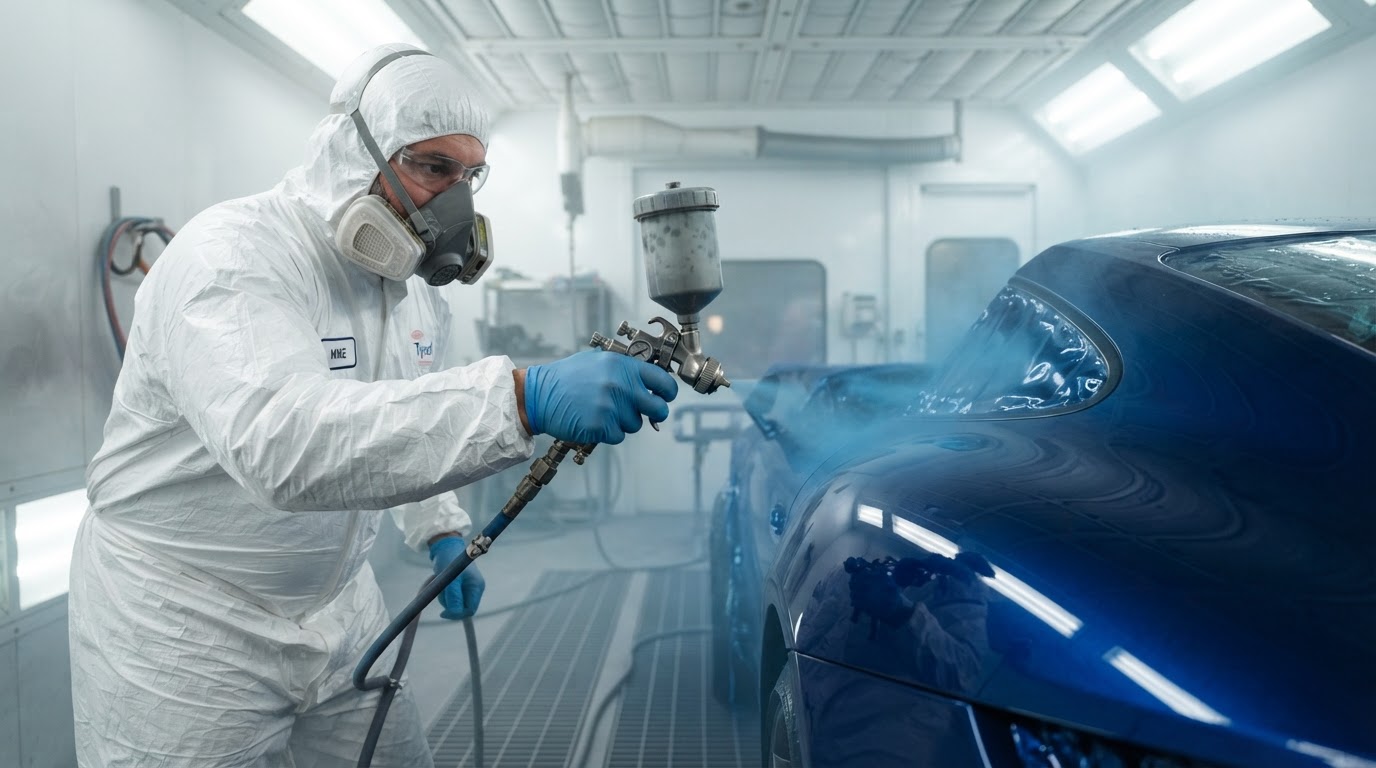
A proper match starts by measuring the existing finish — with a spectrophotometer where available, and always with spray-out test cards. The painter adjusts the formula against the test panels until the sprayed sample disappears next to the vehicle.
Blending: the invisible transition
Even a great match can show a boundary line on a large panel. Blending feathers the new color into the adjacent panel, often across a body line or into an adjacent door, so there is no visible edge. Done well, you cannot find the repair.
Metallics, pearls and three-stage paints
Modern finishes often contain metallic flake or pearl pigments that change appearance with viewing angle. These require careful flake orientation and, on three-stage pearls, applying the correct mid-coat — shortcuts show up as a color that 'shifts' differently from the rest of the car.
What you should expect
The repaired area should be indistinguishable in daylight, shade and under street lights. If you can see a difference, say so before accepting the vehicle — a shop confident in its paint work will correct it.
Need automotive painting & color matching in West Park?
Cannan Family Collision inspects, documents and repairs — with a written estimate you can share with your insurer.