
Fit and finish is a craft
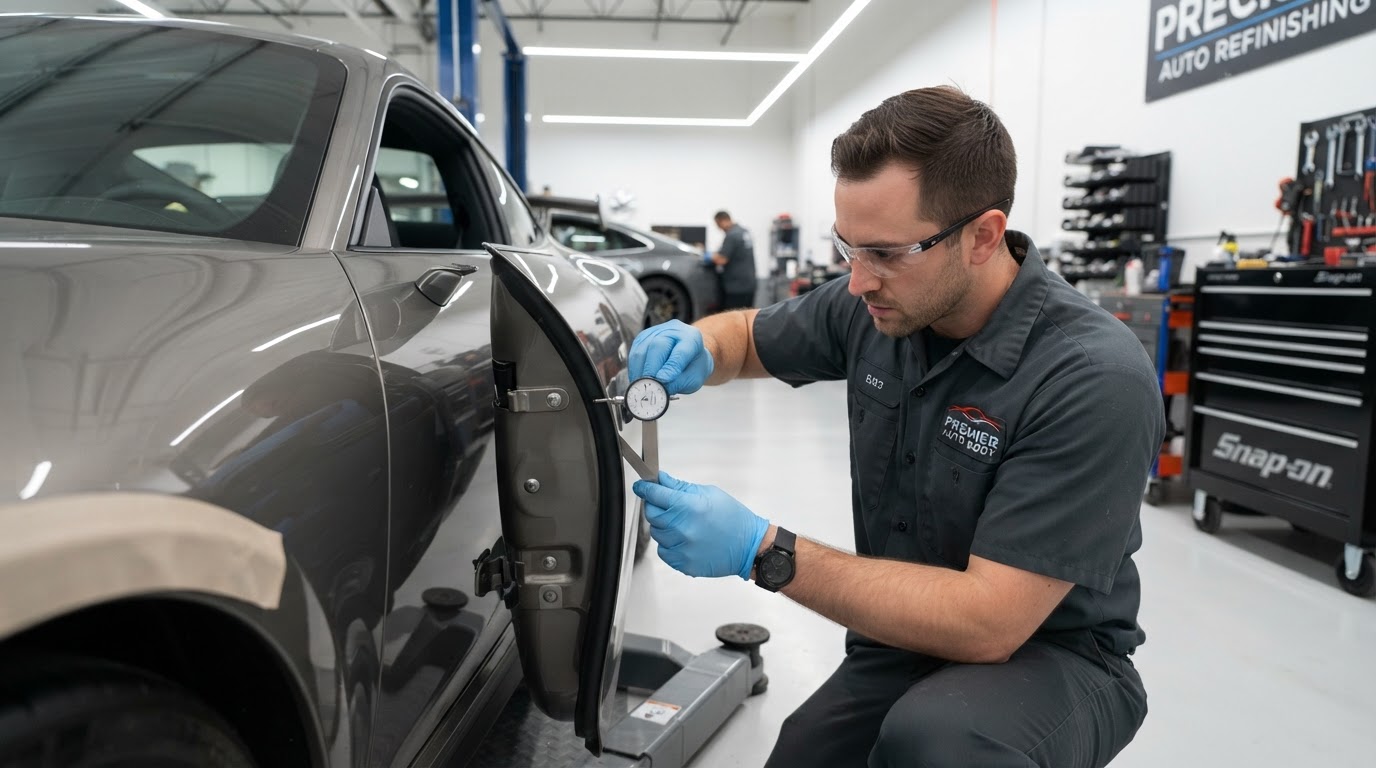
A replacement panel that is bolted on but not aligned is obvious to every eye. We set panel gaps, adjust hinges and latches, and align trim so doors close with a solid click and every line flows the way the manufacturer intended. Panel alignment and damaged parts replacement is the difference between a repair that looks correct from a distance and one that holds up to close inspection. Even gaps, smooth body lines, and doors that close with a confident sound — these details separate a professional repair from an amateur one. We check every panel against the adjacent ones, verify that gaps are consistent along their full length, and confirm that nothing binds, rattles, or rubs.
Repair or replace — the honest decision
Some panels are economically repairable; others are cheaper and safer to replace. We weigh damage extent, part availability and cost, and explain the trade-off before ordering anything. A small dent in the middle of a door may be repairable through dent and bumper repair. A panel with torn metal, a crease across a body line, or damage to a mounting flange is usually better replaced. The decision depends on the specific panel, the extent of the damage, and the availability and cost of a replacement part. We explain the reasoning and show you photos of what we found so you understand why we recommend one path over the other. The goal is the best result — not the most expensive one.
Correct parts, correct fit
We source parts that fit the specific year, make and model of your vehicle, and we test-fit before painting. That prevents gaps, misaligned trim and comebacks after the paint is done. Ordering the correct part for the exact vehicle is critical — a fender for a 2019 may not fit a 2020 if the manufacturer changed the design. We verify the part number against your vehicle's identification number, inspect the replacement for damage before installation, and test-fit it on the vehicle before any paint is applied. Painting first and fitting later risks chipping the new finish during adjustment. Test-fitting before paint prevents gaps and comebacks. If automotive painting and color matching is needed on the replacement panel, the fit is verified before the paint booth.
Hardware, seals and adjustments
Alignment is more than the outer skin. We check weatherstrips, window channels, latches and hardware so the repaired panel works — not just looks — like new. A door that looks perfect but leaks water in the rain has not been properly repaired. A hood that aligns visually but rattles at highway speed has a hardware issue. We replace damaged clips, adjust latch strikers, verify window operation, and check weatherstrip sealing so every panel functions the way it did before the damage. This attention to the hidden components is what separates a complete repair from a cosmetic one. If the impact also caused structural damage and body straightening concerns, those are addressed before the panels are fitted so the structure is correct and the panels hang straight.
OEM, aftermarket, and used parts
OEM (original equipment manufacturer) parts are made by the vehicle's manufacturer and guaranteed to fit. Aftermarket parts are made by third parties and vary in fit and quality. Used parts are salvaged from other vehicles. Your estimate specifies which type is included, and we can explain the trade-offs — fit, warranty, availability, and cost — before any parts are ordered. OEM parts offer the most predictable fit and finish, which is why many manufacturers recommend them for collision repairs. Aftermarket parts can be a cost-effective alternative when availability or budget is a concern, though fit may require more adjustment. We help you understand the differences so you can make an informed decision. The choice is yours; we provide the information.
How to check the work at pickup
Sight down the body lines, run a finger along the gaps, and open and close every door, hood, and trunk. Everything should move with a solid, even feel. No binding, no rattles, no uneven gaps. If anything looks off, raise it before you accept the keys — a shop confident in its work will correct it. We inspect the vehicle with you at delivery so you can verify the fit, the finish, and the function before you drive away. To start the process, request an assessment and we will evaluate what your vehicle needs.
Frequently Asked Questions
How long does panel alignment & damaged parts replacement take?
It depends on the extent of the damage and parts availability. We give you a time estimate with your written estimate and keep you updated if anything changes.
Do you work with insurance?
Yes. We prepare written estimates and photo documentation you can share with your adjuster, and you always have the right to choose your repair shop.
Can I get an estimate before committing?
Absolutely. Every repair starts with a thorough inspection and a written estimate — no obligation, no pressure.
Will the repair be visible?
Our goal is an invisible repair: matched paint, blended transitions and even panel gaps. We inspect the work with you before pickup.
Where are you located?
We're at 2201 SW 58th Terrace, West Park, FL 33023, with on-site parking for customers.
Do you service my make of vehicle?
We service most domestic and import makes. Check our Vehicles We Service & Repair section on the homepage, or contact us to confirm.
What should I bring to my assessment?
Bring your vehicle, photos of the damage if you have them, and your insurance claim number if you plan to file. The assessment is no-obligation.
Can I drive my car after the damage?
Only if it is safe to do so. If the vehicle pulls, leaks fluid, shows warning lights, or sits unevenly, arrange a tow instead of driving it.
Helpful Resources
Understanding Panel Alignment and Fit
Even gaps and solid door closes are the signature of a careful repair. Here is what panel alignment actually involves.
When to Repair or Replace Damaged Body Parts
Damage extent, material, part availability and cost — the four factors behind every repair-versus-replace decision.
Preparing for Panel Alignment and Parts Repair
What to know before panels come off — scheduling, parts ordering, and how to review the fit at pickup.
Request This Service
Cannan Family Collision — 2201 SW 58th Terrace, West Park, FL 33023
Request Assessment Get Directions