
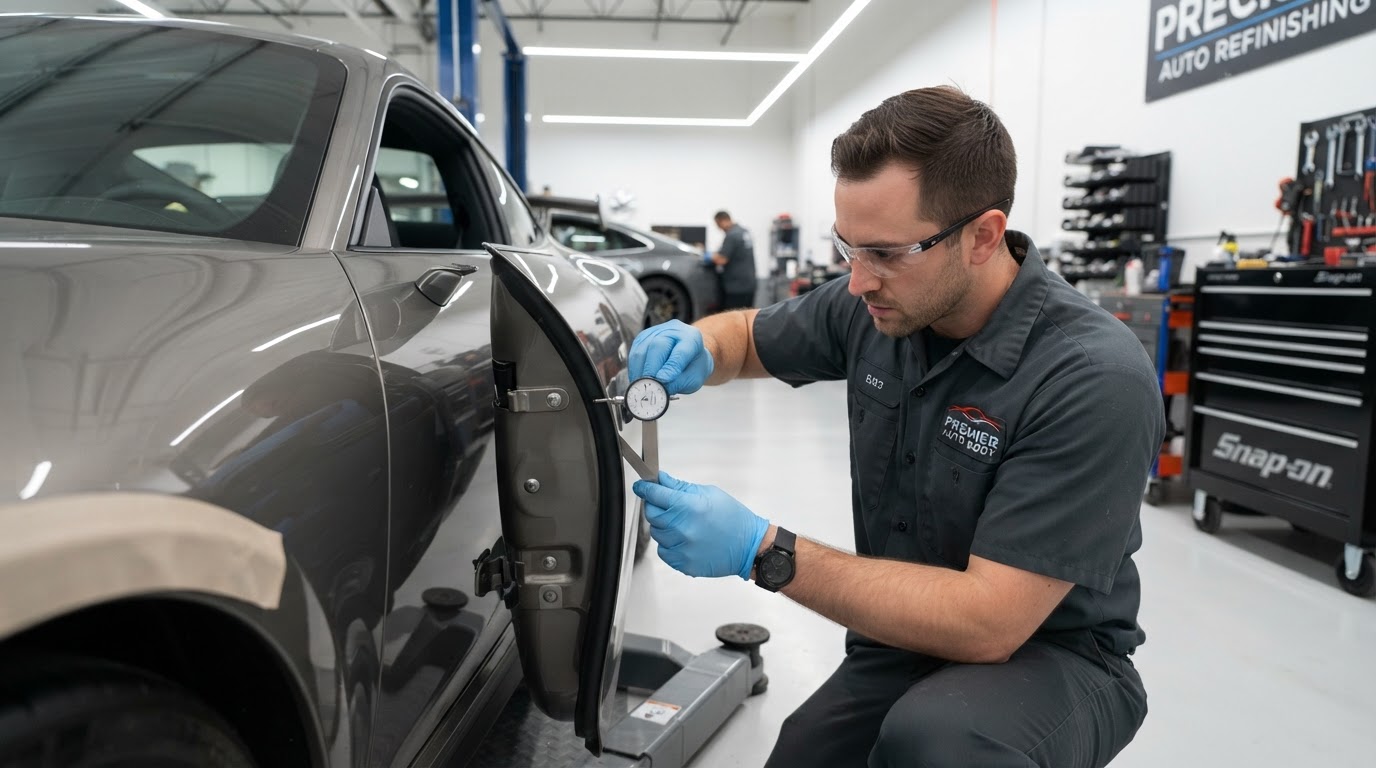
What panel gaps tell you
The gaps between doors, fenders, hood and trunk should be even along their full length and match side to side. Uneven gaps are the most visible sign of a rushed repair — and one of the easiest things for a buyer to spot.
Alignment is more than the bolt
Panels sit on hinges, latches, slides and shims. Aligning a door means adjusting the hinges, checking the latch strike, verifying the weatherstrip compresses evenly and confirming the window seals in the channel. The outer skin is only the last step.
Why parts quality matters
Not all replacement panels fit the same. Quality parts test-fit correctly; poor ones need rework to close the gaps. A shop that sources correct parts for your exact year, make and model avoids the comebacks that cheap parts cause.
Test-fit before paint
The smart sequence is to fit the panel, set the gaps, then remove it for paint. Painting first and fitting later risks chipping the new finish during adjustment — and shows in the final result.
How to check the work yourself
At pickup, sight down the body lines from the front and rear, run a finger along the gaps, and open and close every door, the hood and the trunk. Everything should move with a solid, even feel — no binding, no rattles.
Need panel alignment & damaged parts replacement in West Park?
Cannan Family Collision inspects, documents and repairs — with a written estimate you can share with your insurer.