
Matching the repair to the scratch
Scratches range from surface scuffs in the clear coat to marks that reach primer or bare metal. Each depth needs a different fix — polish, spot repair, or section repaint — and we recommend the least invasive option that fully restores the finish. The test is simple: if a fingernail dragged across the mark does not catch, polishing may be all that is needed. If the fingernail catches, the scratch has penetrated deeper and may require spot repair or repainting. Our scratch repair, polishing, and finishing assessment identifies the depth and recommends the appropriate method, so you do not pay for a repaint when a polish would suffice — and you do not get a polish when the damage needs more.
Polishing and paint correction
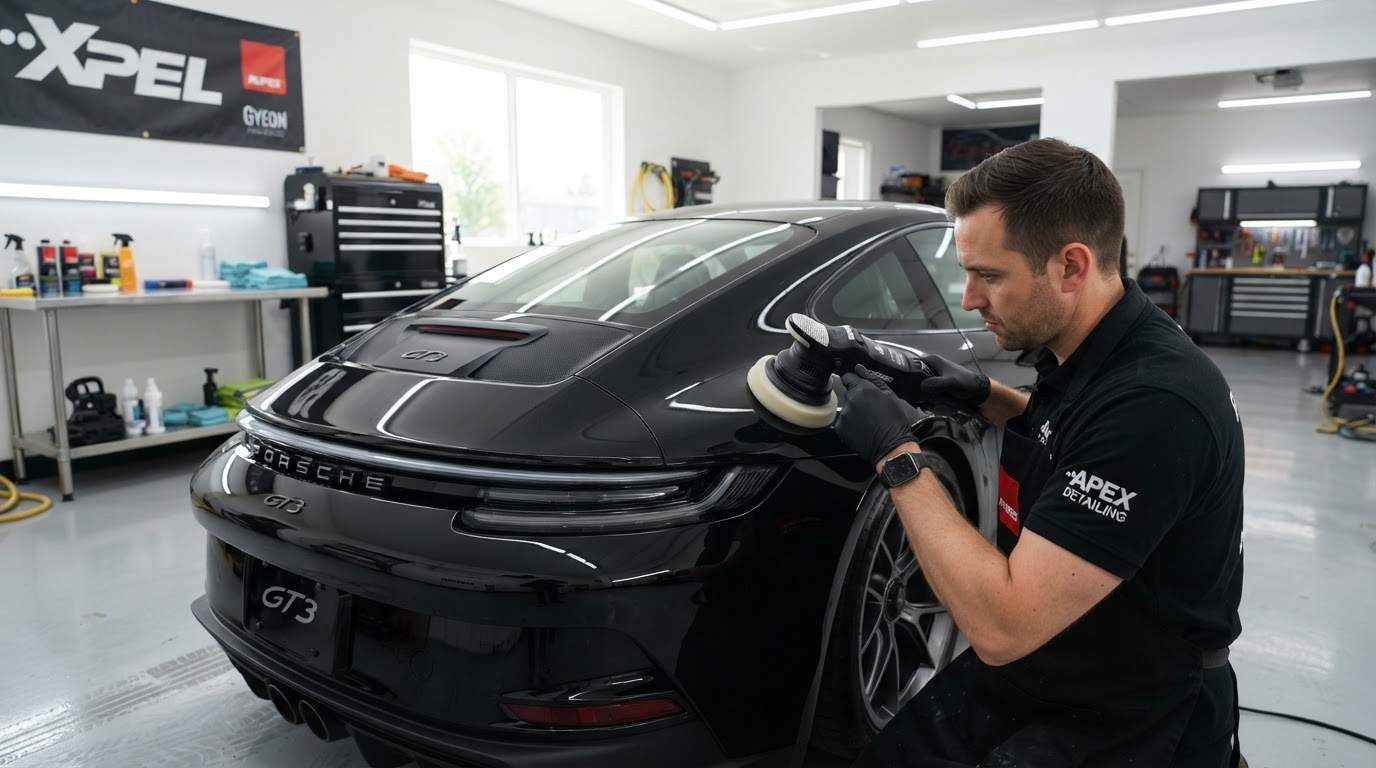
Shallow scratches and swirl marks are removed with machine polishing and compounding. This restores gloss and depth without any paint, and is often the fastest, most affordable fix. Polishing removes a microscopic layer of clear coat to eliminate surface imperfections — swirl marks from improper washing, light scuffs, and hazing from sun exposure. The process uses graduated compounds and pads, starting with a cutting compound to level the surface and finishing with a polishing compound to restore gloss. No paint is applied, the factory finish is preserved, and the result is a surface that looks deeper and more reflective than before. For widespread surface damage, automotive painting and color matching is not needed when polishing will restore the finish.
Spot repair and blending
Deeper scratches are sanded, primed, base-coated and cleared, then blended into the surrounding panel. Done correctly, the repaired spot disappears into the original finish. Spot repair addresses damage that has penetrated the clear coat into the base coat or primer without requiring a full panel refinish. The area is feathered back, primer is applied, color is matched to the existing finish, clear coat is laid down, and the edges are blended so there is no visible transition. This is a middle ground between polishing and a full panel repaint — more than a polish, less than a full refinish. If the scratch has exposed bare metal, prompt repair prevents corrosion from starting beneath the paint.
Protecting the result
We finish with quality sealants or wax and give you simple care instructions — wash technique, products to avoid and when to reapply protection — so the repair lasts. Proper maintenance after a scratch repair keeps the finish protected and prevents new damage. Wash by hand with a clean microfiber mitt and pH-neutral shampoo, avoid automatic car washes with brushes that can reintroduce swirl marks, and apply wax or sealant regularly to maintain the protective layer. Parking away from tight spaces reduces the risk of new door dings and scratches. These habits extend the life of the repair and keep the finish looking fresh.
When a scratch needs more than polishing
If a scratch has broken through the clear coat into the base coat or primer, polishing alone will not restore it. Scratches that expose bare metal need prompt repair to prevent corrosion — especially in South Florida's humid climate, where moisture reaching bare metal can start rust beneath the paint within weeks. An assessment determines the depth and the appropriate method. If the damage is extensive enough to require panel refinishing, collision and auto body repair or panel alignment and damaged parts replacement may be part of the repair plan. The goal is always the least invasive approach that fully restores the finish — not more work than the damage warrants.
What to expect from scratch repair
Polishing can often be completed same-day. Spot repairs and panel refinishing take longer — typically several days — because they involve sanding, priming, painting, curing, and final polishing. We provide a time estimate with your written estimate and keep you updated. To schedule an assessment for your vehicle's scratches, visit our contact page.
Frequently Asked Questions
How long does scratch repair, polishing & finishing take?
It depends on the extent of the damage and parts availability. We give you a time estimate with your written estimate and keep you updated if anything changes.
Do you work with insurance?
Yes. We prepare written estimates and photo documentation you can share with your adjuster, and you always have the right to choose your repair shop.
Can I get an estimate before committing?
Absolutely. Every repair starts with a thorough inspection and a written estimate — no obligation, no pressure.
Will the repair be visible?
Our goal is an invisible repair: matched paint, blended transitions and even panel gaps. We inspect the work with you before pickup.
Where are you located?
We're at 2201 SW 58th Terrace, West Park, FL 33023, with on-site parking for customers.
Do you service my make of vehicle?
We service most domestic and import makes. Check our Vehicles We Service & Repair section on the homepage, or contact us to confirm.
What should I bring to my assessment?
Bring your vehicle, photos of the damage if you have them, and your insurance claim number if you plan to file. The assessment is no-obligation.
Can I drive my car after the damage?
Only if it is safe to do so. If the vehicle pulls, leaks fluid, shows warning lights, or sits unevenly, arrange a tow instead of driving it.
Helpful Resources
Understanding Scratch and Paint Damage
Clear-coat scuff, primer scratch or bare metal? The depth of the mark decides the repair — here is how to tell them apart.
Scratch Repair: Polishing or Repainting?
The least invasive repair that fully restores the finish is almost always the right one. Here is how the choice is made.
Caring for Repaired Paint Surfaces
Simple habits that keep a repaired panel looking factory-fresh — washing, protection and what to avoid.
Request This Service
Cannan Family Collision — 2201 SW 58th Terrace, West Park, FL 33023
Request Assessment Get Directions