
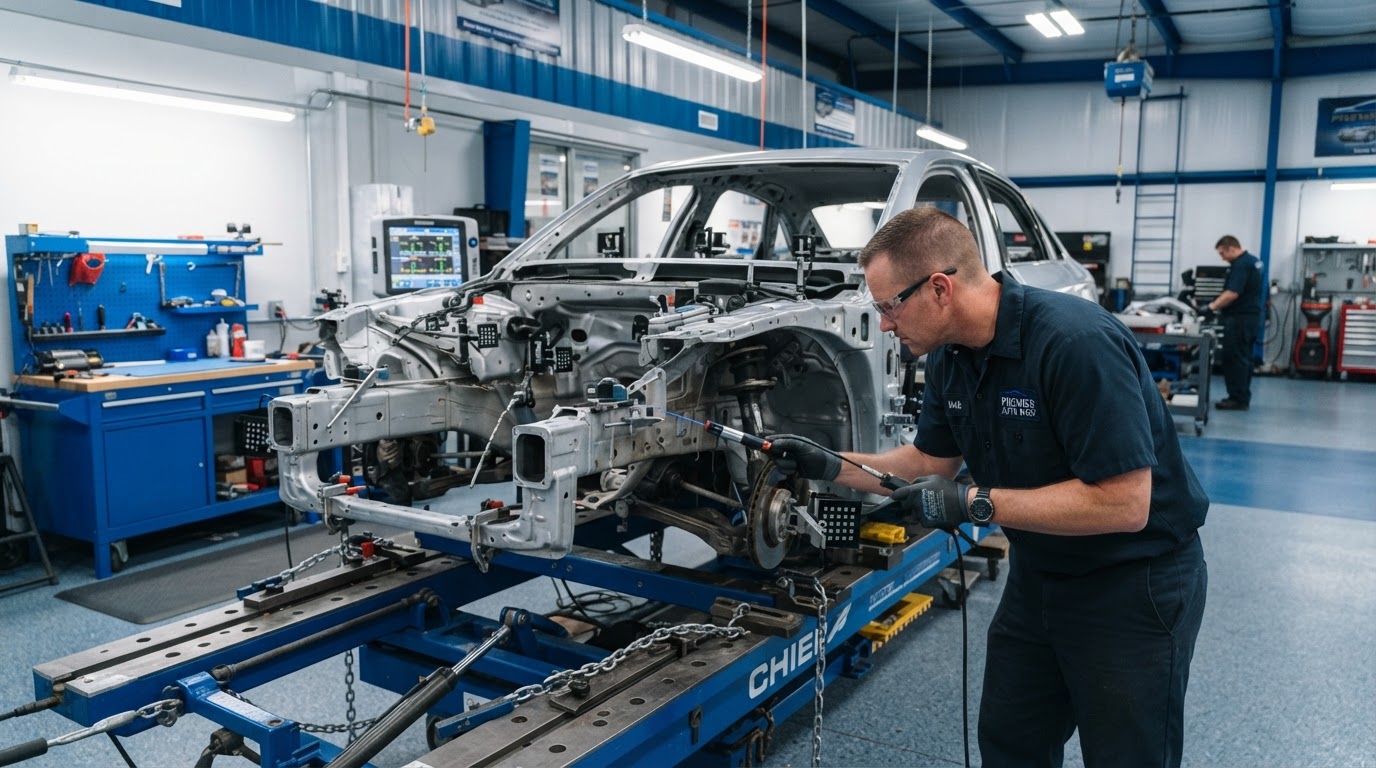
What counts as structural damage
Structural damage is any deformation of the frame, unibody rails, pillar or crush structures — the parts designed to absorb energy and hold the vehicle's geometry. It can exist even when the outer panels look repairable, and it can be invisible to the eye.
The signs you can notice
A steering wheel that pulls, uneven tire wear, doors or hood that no longer close cleanly, gaps that are wider at one end of a panel than the other, or a vehicle that sits lower on one corner all point to possible structural displacement.
Why it cannot be judged by eye
A few millimeters of misalignment at a rail can be impossible to see but enough to affect crash performance and wheel alignment. That is why reputable shops measure against factory specifications instead of eyeballing the damage.
How it is measured
Shops use measuring systems that compare key points on the vehicle to the manufacturer's dimension data. The readings show exactly which points are high, low or displaced sideways — a map of the damage, not a guess.
What it means for safety and value
Properly repaired to specification, a structure can perform as designed in a future impact. Improperly repaired, it may not. Documented, correct structural repair also protects the vehicle's value and keeps future buyers informed.
Need structural damage & body straightening in West Park?
Cannan Family Collision inspects, documents and repairs — with a written estimate you can share with your insurer.